How to Remove Tire Marks from Concrete: A DFW Guide
You sweep the driveway, rinse it down, step back, and the concrete looks clean. Then those black arcs by the garage door still stare at you. That's a common sight across Dallas-Fort Worth, especially on driveways, parking pads, sidewalks, and garage entries where cars turn the same way every day.
Most homeowners try the obvious first. A hose. Dish soap. A little scrubbing. Sometimes even more pressure than the surface should get. The problem is that tire marks usually aren't plain dirt sitting on top of the concrete. If you want real results, you need to clean them like what they are, not like mud.
Table of Contents
- Why Are Tire Marks So Stubborn
- First Assess the Stain and Your Concrete
- The Best DIY Method for Light Tire Marks
- When to Call a Professional Power Washing Service
- How to Prevent Tire Marks from Coming Back
- Get a Clean Driveway You Can Be Proud Of
Why Are Tire Marks So Stubborn
Pull into the garage the same way for a few months in a DFW summer, and the driveway starts telling on you. The darkest marks usually show up where the tires turn, pause, and twist against the slab.
The reason is chemical as much as mechanical. Tire marks often come from plasticizer migration, where petroleum-based compounds in the tire transfer onto or slightly into the concrete surface. Heat makes that transfer worse, and hot concrete in North Texas gives those residues plenty of help. That is why a quick rinse and a bucket of soap often leave the stain behind.
Practical rule: If the stain came from a petroleum-based residue, start with the right cleaner before you start adding more pressure.
Pressure still has a place, but pressure alone usually does not dissolve what the tire left behind. I see this a lot on driveways where the homeowner already made a few passes with a consumer pressure washer and got partial improvement, but the black arc near the garage door stayed put.
Concrete type matters too. Older broom-finished concrete can usually handle more scrubbing and a stronger cleaning process than new concrete that is still curing well, a sealed driveway, or stamped decorative work. On those surfaces, the goal is to remove the transfer without dulling the sealer, lifting color, or etching the paste at the top of the slab.
You have two competing goals:
- Remove the tire residue
- Avoid damaging the concrete or its finish
That trade-off is where generic DIY advice falls short. A basic driveway in good condition gives you more room to work. New, sealed, stamped, or coated concrete needs a more controlled approach, because the wrong degreaser, too much dwell time, or overly aggressive pressure can create a bigger problem than the original mark.
If the dark area also has oily spotting or runoff, the cleanup gets more complicated because overlapping petroleum stains can mask what is really coming from the tires. In that case, it helps to review how oil stains change the concrete cleaning process before choosing a product or pressure setting.
First Assess the Stain and Your Concrete
Before you grab a degreaser, take a slow look at both the stain and the slab. Good results often begin with this step.
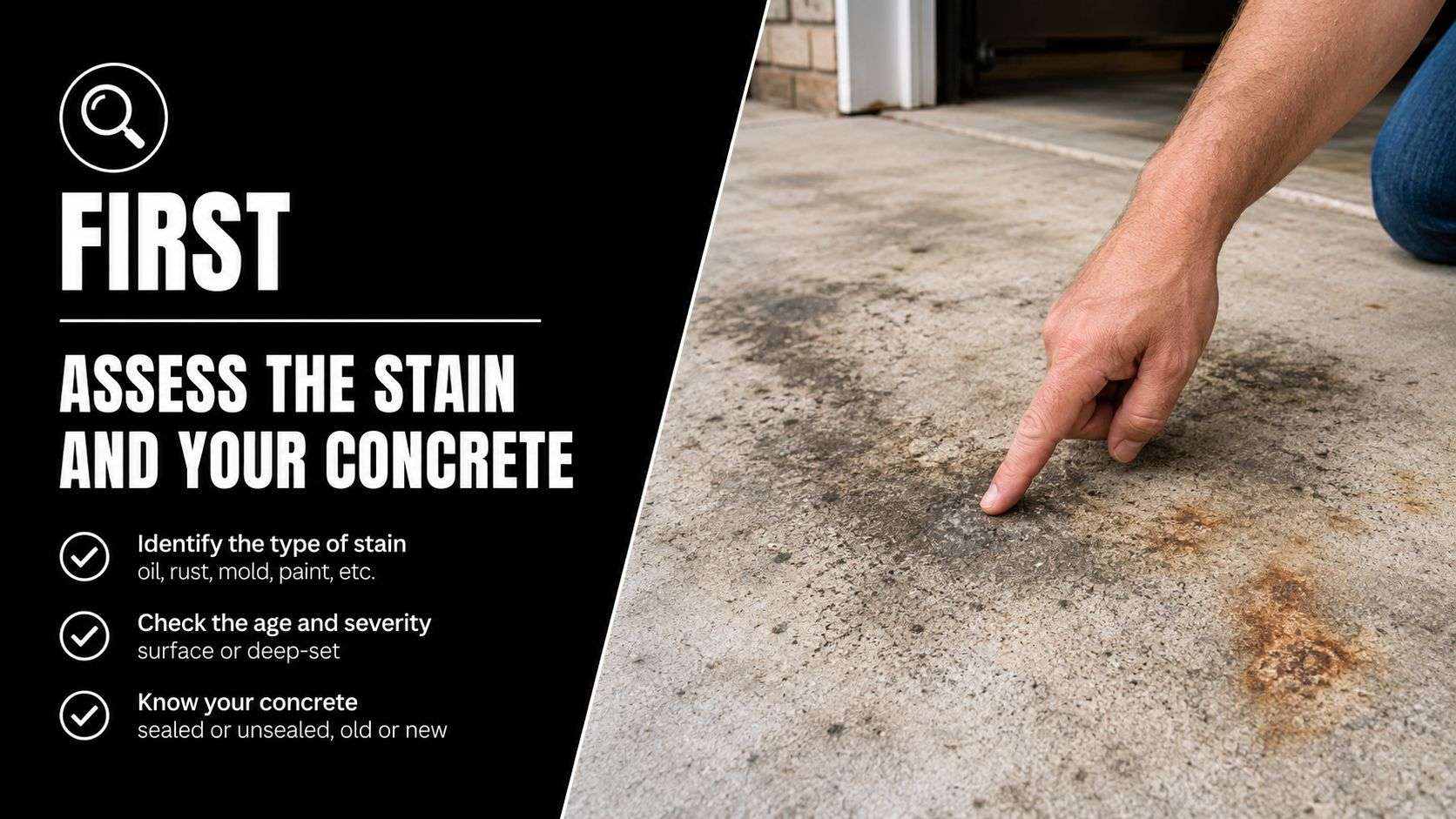
Look at the stain before you pick a cleaner
Fresh tire marks usually look dark on the surface and feel more like a recent transfer. Older marks often look baked in, especially on sun-exposed driveways. They may have a duller edge and can blend into other stains like dirt, oil, or runoff from the street.
Use this quick check before you start:
- Fresh and light marks usually respond better to a careful DIY cleaning.
- Marks in turning zones near garage doors or tight parking areas tend to be more stubborn because the tire twists in place.
- Large black patterns across a parking area often need more time, more product, and better rinse control than a homeowner setup can give.
- Mixed staining matters too. If you see oil spots in the same area, review this guide on how oil stains change concrete cleaning, because overlapping contamination can make tire marks look worse.
Match the method to the surface
The importance of this part is often underestimated. Generic advice can be risky on newer concrete, decorative concrete, and epoxy-coated floors. In practitioner discussions, pros recommend very low pressure on concrete that's less than 18 months old to reduce the risk of cream loss or surface damage, and they also note that epoxy needs non-filming detergents and repeated gentle passes instead of one aggressive cleaning, as discussed in this professional pressure washing forum thread on newer concrete tire marks.
That means your first question shouldn't be “What cleaner should I buy?” It should be “What surface am I cleaning?”
A simple field guide helps:
| Surface type | Main risk | Safer approach |
|---|---|---|
| Standard older concrete | Overuse of cleaner or uneven rinsing | Degreaser, dwell, scrub, thorough rinse |
| Newer concrete | Cream loss and surface disturbance | Very low pressure and a gentle method |
| Stamped or decorative concrete | Sealer damage or color disruption | Mild products, soft brushing, caution |
| Epoxy-coated concrete | Film, haze, or coating damage | Surface-specific detergent and repeated gentle passes |
A quick video walkthrough can help you think through the surface before you clean.
Don't judge the job by the stain alone. Judge it by the stain plus the surface.
If you're dealing with plain concrete and a light mark, you can usually move to a DIY method with confidence. If the slab is newer or decorative, caution saves money.
The Best DIY Method for Light Tire Marks
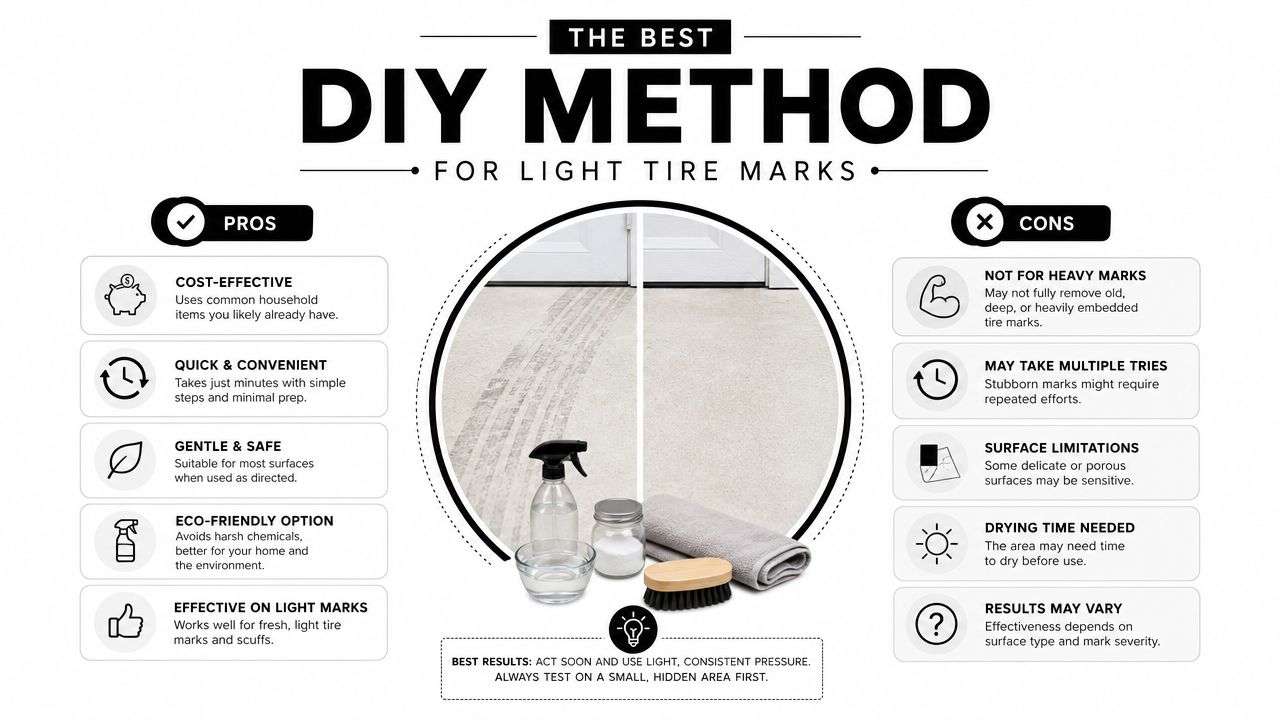
A light tire mark on plain concrete is usually a Saturday job, not a restoration project. The key is matching the method to what the stain is. You are cleaning off transferred tire compounds, so a concrete-safe degreaser does more work than brute force ever will.
What you need before you start
Keep the setup simple and surface-safe.
- Concrete-safe degreaser made for oil and rubber transfer
- Stiff-bristled synthetic brush instead of wire
- Garden hose or steady water supply for a full rinse
- Gloves and eye protection
- A small test area before you clean the visible section
If you are working without a machine, this guide on how to clean concrete without a pressure washer pairs well with this process.
A simple process that works on light marks
For standard, older concrete, the safest DIY approach is chemistry first, agitation second, rinse last. That order matters because the dark mark is often a mix of rubber residue and plasticizer transfer. If you scrub too early or hit it with too much pressure, you can rough up the slab and still leave the stain behind.
Use this process:
Sweep the area first
Get rid of sand, grit, and loose debris so you are not grinding particles into the surface.Test a small spot
Do this anytime the slab has uneven color, patching, a possible sealer, or any finish you are not fully sure about.Apply the degreaser generously
Cover the full mark, including the edges. Tire transfer often spreads farther than the darkest line suggests.Let it dwell
Give the cleaner a few minutes to loosen the oily residue. Drying out on the surface is not helpful, so work in manageable sections.Scrub with steady pressure
Use a stiff synthetic brush and work the entire mark, not just the center. Circular passes usually clean more evenly than hard back-and-forth strokes in one spot.Rinse thoroughly
Flush away the loosened residue with clean water. If you use a pressure washer, use it as a rinse tool and keep the pressure reasonable.
On light tire marks, the cleaner and dwell time do the hard part. The brush and rinse finish the job.
What usually goes wrong with DIY cleaning
I see the same mistakes all over DFW driveways.
The first is using household soap and expecting it to cut through tire transfer. It may remove dust and surface grime, but it usually leaves the dark shadow behind.
The second is rushing. Homeowners often spray the product and start scrubbing right away. A short dwell time gives the degreaser a chance to break down what the tire left on the concrete.
The third is getting aggressive because the mark does not disappear on the first pass. That is where damage starts, especially on newer concrete, sealed surfaces, and decorative finishes. A careful second application is usually the smarter move.
Set expectations correctly, too. Light marks often clean up well. Older marks in a regular turning path may fade a lot without disappearing completely in one round, and that does not mean the method failed.
When to Call a Professional Power Washing Service
Some tire marks are DIY jobs. Others are property-protection jobs.
If the stain covers a large area, sits on decorative or sealed concrete, or keeps coming back after a careful cleaning attempt, it's time to stop experimenting. That's especially true for newer driveways and commercial surfaces where appearance matters every day.
Jobs that are better left to a pro
These situations deserve professional equipment and judgment:
- New concrete where surface damage is a real concern
- Stamped or sealed driveways that can be scarred or stripped by the wrong process
- Epoxy or specialty floors that need surface-specific detergents
- Large commercial entries or parking areas where uneven cleaning stands out
- Deep, old, repeated tire marks in the same turning path

One reason pros handle these jobs better is control. Modern methods on newer concrete have moved away from brute-force cleaning. A demonstration of tire mark removal on brand-new concrete shows hot steam being used at about 400 PSI, with heat softening the rubber while low pressure reduces the chance of stripping the delicate top layer, as shown in this hot steam tire mark removal demonstration on new concrete.
That matters in real life. The wrong wand angle or too much pressure can leave the surface looking patched, striped, or worn even after the mark is gone.
Heat and chemistry often solve what brute pressure can ruin.
If you're comparing service options for a residential surface, this page on DFW driveway power washing services gives a good sense of what a dedicated driveway cleaning service covers.
Why professional cleaning protects property value
For homeowners, clean concrete changes how the whole front elevation reads. The driveway, walk, and garage approach take up a lot of visual space. When they're stained, the house can look tired even if the lawn and paint look fine.
For commercial properties, the value is even more practical. Clean entry concrete helps a site look maintained, safer, and ready for customers, tenants, or visitors. That matters for office parks, retail centers, apartment communities, restaurants, industrial sites, and managed properties across DFW.
Professional power washing also brings consistency. A homeowner may be able to improve one spot. A trained crew can clean the full area so the concrete looks uniform instead of partly treated.
How to Prevent Tire Marks from Coming Back
A clean driveway can pick up fresh tire marks fast if the surface is still exposed, soft, or trapping residue in the same path every day. Around Dallas-Fort Worth, summer heat makes that worse. Hot tires leave behind more material, and some of that dark staining is tied to plasticizer migration, not just loose rubber sitting on top.
The best long term defense
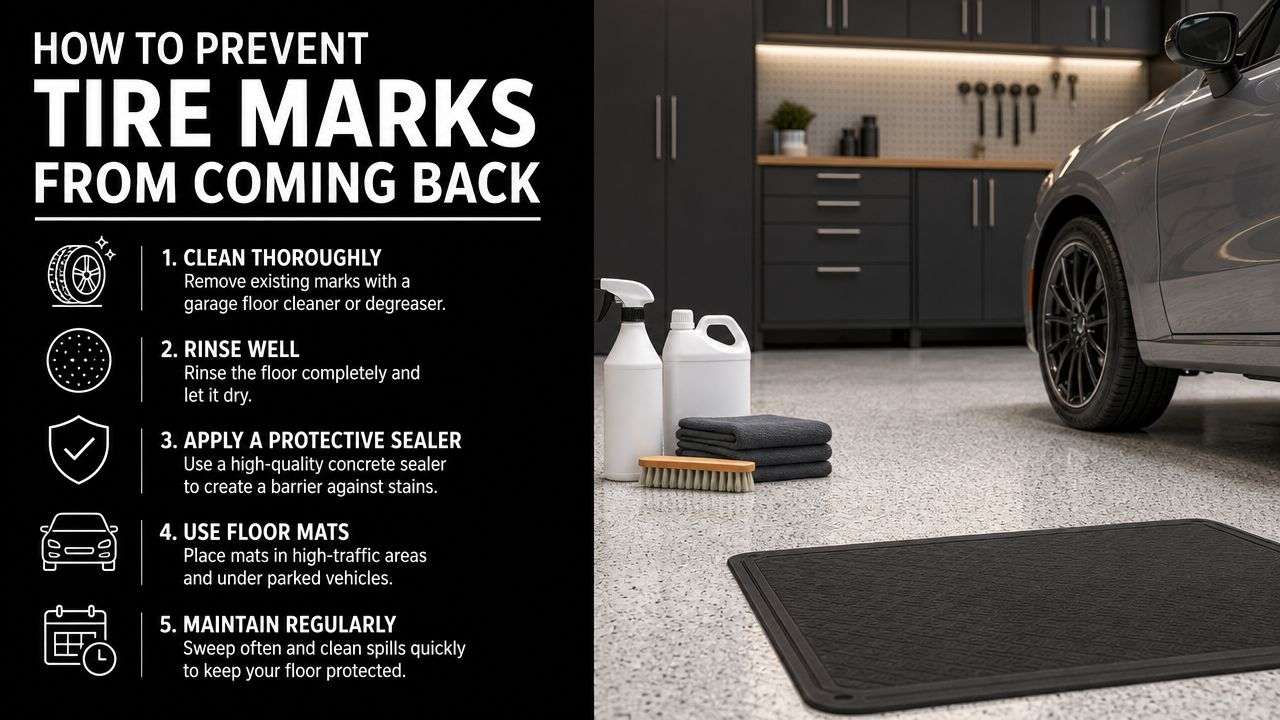
Prevention starts with the concrete itself. Bare concrete is more porous, so it holds onto staining more easily. A good sealer cuts down how much material can work into the surface and makes routine cleanup easier.
The right sealer depends on the slab.
New concrete needs extra caution. Sealing too early can trap moisture and create other finish problems, so follow the cure window recommended for that slab before applying anything. Sealed concrete usually needs inspection more than guesswork. If the sealer is worn thin in the tire path, marks come back faster because those areas are taking the abuse first. Stamped concrete has another trade-off. It often looks great because of its color and texture, but those same details can make aggressive scrubbing or the wrong product more noticeable. On decorative surfaces, the goal is protecting the finish as much as preventing the stain.
A penetrating sealer is often the safer choice for standard driveways because it helps resist absorption without creating a thick film on top. Film-forming sealers can work in some settings, but they may show wear in turning areas and can need more careful maintenance.
Small habit changes that help
Daily use matters more than homeowners expect.
- Avoid turning the wheel while stopped because that twisting action leaves more material in one spot.
- Rinse or clean new marks early while they are still near the surface.
- Fix oil and fluid leaks so the driveway is not holding both petroleum staining and tire residue in the same area.
- Change parking position when possible so the same track is not getting heated and marked every day.
- Keep the driveway reasonably clean because dirt and residue give fresh marks more to bind to.
For larger homes, shared drives, apartment communities, and commercial properties, scheduled cleaning helps for a simple reason. Buildup is easier to remove when it is managed in layers instead of left to bake in for months.
If the driveway is sealed, stamped, newer concrete, or part of a high-visibility front approach, prevention is usually worth a professional eye. A good contractor can tell whether you need cleaning, resealing, or a change in maintenance habits before the surface starts looking permanently worn.
Get a Clean Driveway You Can Be Proud Of
If you've been trying to figure out how to remove tire marks from concrete, the key is matching the method to the stain and the surface. Light marks on standard concrete can often be handled with a degreaser, a stiff-bristled brush, patience, and a thorough rinse. That's the practical DIY lane.
The higher-risk lane is different. Newer concrete, stamped finishes, sealed driveways, epoxy floors, and large visible areas call for more care. In those cases, the smartest move usually isn't more pressure. It's better process control.
That's also where power washing delivers more than a cosmetic win. For homes, it sharpens curb appeal and helps the property look cared for. For commercial sites, it supports a cleaner, more professional appearance for customers, tenants, and visitors. Clean concrete sends a message before anyone reaches the front door.
If the marks are light, start small and clean carefully. If the surface is valuable or the stain is stubborn, bring in someone who knows how to remove the mark without damaging what's underneath.
If you're in Dallas-Fort Worth and want help restoring stained concrete without risking surface damage, Water Works Power Washing is a solid local choice. They serve residential and commercial properties across the area and can help with driveways, sidewalks, parking areas, and other exterior surfaces. Reach out for a free estimate and get your concrete looking clean, sharp, and ready to impress again.